Why Blue Clay in Victoria Changes How Excavation Has to Be Done
If you have spent any time working around excavation projects in Greater Victoria, you have likely heard people talk about blue clay. It usually comes up after a job runs into unexpected challenges. While it is common in this region, it is also one of the most misunderstood ground materials.
Blue clay itself is not a problem. Methods that work well in granular materials typically do not translate once blue clay is exposed. Understanding ground conditions before a project kicks off can help prevent delays, rework, and added costs later in a project.
What People Mean by “Blue Clay” in Victoria
Blue clay is a dense clay-rich material commonly encountered on residential and commercial sites throughout Greater Victoria. When freshly excavated, it often has a bluish or grey tone, which is where the name comes from.
One reason blue clay causes confusion is that it can appear stable when dry and undisturbed. During early site visits or test digs, it may seem firm enough to support equipment and foot traffic. That initial appearance does not always reflect how it behaves once excavation begins and moisture is introduced.
Why Blue Clay Matters Before You Start Digging
Ground and material conditions influence nearly every excavation decision, including depth, equipment selection, and sequencing. Blue clay behaves differently than other materials, which means excavation plans that do not account for it can change quickly once work starts.
Once disturbed, blue clay tends to hold moisture rather than allow it to pass through. This affects working conditions, drainage planning, and how excavated areas perform over time. Decisions made early in the excavation phase often set the tone for the rest of the project.
Common Issues Encountered When Excavating in Blue Clay
Water management is one of the most common challenges. Because blue clay does not drain easily, water can collect in excavated areas even after relatively light rainfall. This can soften working surfaces and make it harder to maintain stable access for equipment.
Related Post: Stormwater Management Solutions
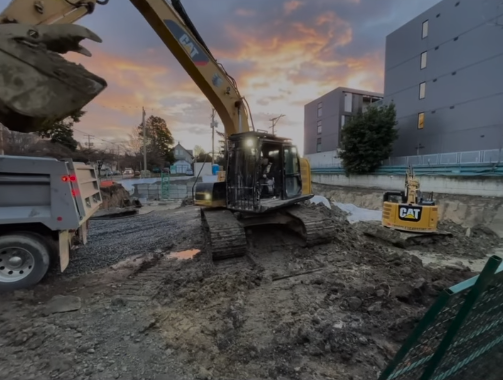
Blue clay can also be exceptionally sticky. It can stick to anything that comes into contact with it, including tires, machine tracks and boots. This can slow things down considerably as it will tend to stick to the inside of excavator buckets and the inside of dump truck boxes. These things can be managed with planning but pretty much always slow a project down to some degree.
Compaction and Backfill Considerations
Clay materials do not compact the same way granular materials do. If clay is placed or compacted under poor conditions, it can lead to movement over time. This is particularly important around foundations, service trenches, and other areas where long term stability matters. Material selection and placement methods become critical parts of the excavation process when blue clay is involved.
Cost Factors Associated With Blue Clay
Excavation in blue clay can affect project costs in several ways. Additional machine time may be required to manage soft areas, water buildup, or material handling. Disposal costs can increase if excavated clay cannot be reused on site.
Timelines may also be affected, especially during wetter months when clay soils are harder to work with. Delays can result in remobilization costs or extended equipment rentals. These are factors that are not always obvious during early budgeting.
Related Post: 6 Factors That Affect Excavation Cost
Situations Where Blue Clay Creates Added Risk
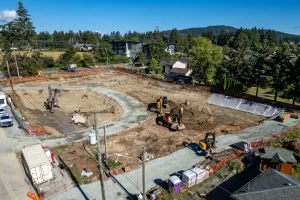
Some projects are more sensitive to blue clay conditions than others. Tight residential lots with limited access leave less room to manage soft ground or staging areas. Renovations that tie into existing structures can also be affected if excavation conditions change unexpectedly.
Seasonal timing matters as well. Projects scheduled during wetter months may face more interruptions when working in clay soils. Identifying these risks early allows for better planning and fewer surprises.
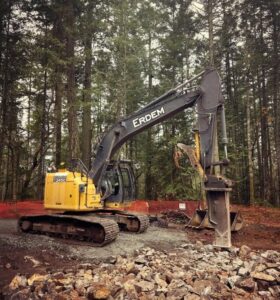
How Erdem Excavating Approaches Blue Clay Sites
When blue clay is present, early assessment is key. Identifying ground conditions before excavation begins allows methods and sequencing to be adjusted as needed.
Drainage considerations are addressed alongside excavation planning rather than as an afterthought. Methods are based on actual site conditions, not assumptions. This approach helps reduce unexpected issues once excavation is underway.
Bottom Line
Blue clay is a reality of excavation work in Victoria. It is manageable, but it requires an informed and careful approach. For property owners and builders, speaking with an experienced local excavation contractor before plans are finalized will make a meaningful difference in how a project progresses.
At Erdem, we welcome diverse and challenging projects. Our clients will tell you, we don’t shy away from the tough stuff that some contractors don’t want to touch. Every part of this business has been built with intention to ensure that we can handle the toughest projects in a timely and professional manner. If you’re ready for an excavation partner that gets the job done right the first time, give us a call today.