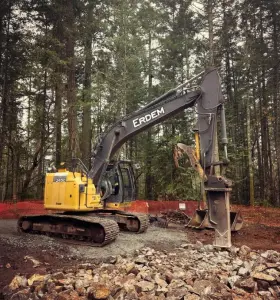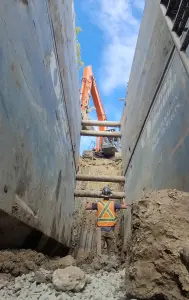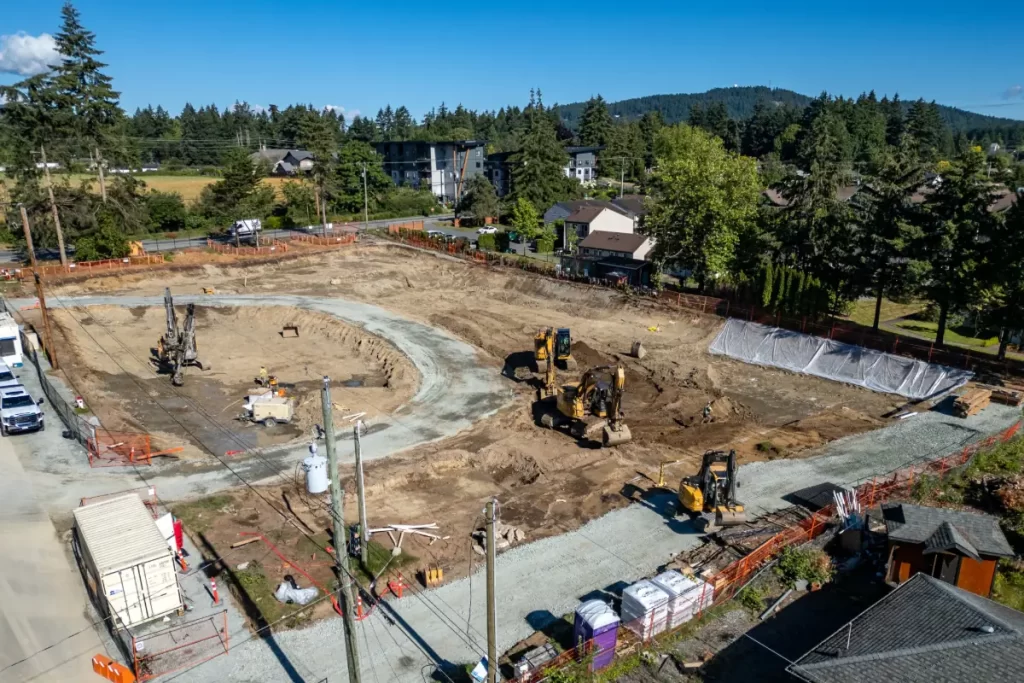
You’ve probably seen tree protection zones near job sites on the South Island. They’re the fenced-off areas around a tree or a stand of trees, that everyone on site is expected to stay out of. They may look like a minor formality, but they aren’t. Ignore one and you can be looking at fines or a stop-work order that throws off your whole schedule, which is exactly the kind of thing that can turn a straightforward project into an expensive one.
If you’re developing anywhere in the Capital Region, you’ll want to understand the rules thoroughly before breaking ground.
Who Decides that a Tree Protection Zone is Required?
This is a permitting and bylaw question, and it varies by municipality. Saanich, Victoria, and Oak Bay each have their own tree protection bylaws, and what triggers a protected tree in one jurisdiction won’t necessarily match the next.
Generally, the trigger comes down to a few factors. Tree size is the common one, measured by trunk diameter, along with species, since many native and significant species are protected at much smaller sizes than other trees. Once a tree meets the threshold, the municipality may require an arborist report as part of the permit process, and that report feeds into the protection zone you’ll have to work around. The thresholds themselves get updated from time to time, so they’re worth confirming against the current bylaw for the project.
Related Post: A Guide To ESC Requirements
Municipal bylaws are where most of the obligation sits on a private lot, but they aren’t always the only layer. Depending on the site, provincial rules can bring additional requirements into play, and some of that gets handled through the municipal process while some of it runs separately. The practical takeaway is to find out early whether anything beyond the local bylaw applies to your site, rather than partway through the job.
What Kinds of Trees are Protected?
The specifics vary, but here are some examples of types of trees that often trigger protection bylaws:
- Trees above a certain trunk diameter
- Native or otherwise significant species
- Garry oak and other trees tied to ecosystems considered at risk
- Trees near watercourses, which may be protected at smaller sizes than elsewhere
Garry oak is the one to watch on the South Island. This is one of the last places in the country where these ecosystems still exist, and municipalities take them seriously. If you have one on your lot, expect it to shape your site plan rather than the other way around.
Again, the exact list and the thresholds behind it depend on where you’re building. Verify locally before you assume a tree can come down.
How the Zone is Established and Protected
Once a tree is protected, a zone around it gets set and fenced off. That fence isn’t decorative. It marks the root zone, and the roots reaching out under that ground are what the whole exercise is protecting.
Inside the zone, the restrictions are strict. No grade changes, no soil compaction, no equipment traffic, no material storage, and no trenching through the root zone. A tree can survive losing branches. It has a much harder time surviving having its roots crushed, cut, or smothered under compacted fill, and the damage often doesn’t show until well after everyone has left the site.
Related Post: Sustainable Excavation – Minimizing Environmental Impact
That’s why the planning matters more than any single technique. When we scope a job with a protection zone on it, we’re mapping out where equipment can go, where spoil gets stockpiled, and how we sequence the dig so the fenced area stays untouched from start to finish. Working around a root zone is slower than working without one, but it’s a lot cheaper than killing a tree you were required to keep.
When Protected Trees Don’t Survive
When a protected tree dies from site damage, the consequences land on the project. Depending on the jurisdiction, that can mean fines and a requirement to replant, on top of the reputational cost of being the project that killed a protected tree. The trees that have to stay are staying for a reason, whether that’s ecology, heritage, or a neighbour’s sightline, and treating the protection zone as a real constraint rather than a suggestion is what keeps the permit clean and the timeline intact.
Hire a Local Company that Knows the Rules
An excavation contractor who knows the regulations and plans the dig around protected trees keeps your project moving and your permit clean. Get that right early and the tree protection zone becomes a line on the plan rather than a problem on site.
If you’ve got an excavation project on a site with protected trees, give us a call.